


Hair Care Routine for Fine Hair: Expert Tips for Styling Fine Hair
Each hair type has its advantages and drawbacks. Fine hair, with its naturally smooth, silky feel, is quick to blow-dry and style. But it’s also prone to limpness and excess oil.
Putting time into your hair routine just to see that hard-earned volume drop throughout the day can be disheartening—but don’t give up just yet. Building volume and texture to fine, flat hair may take a little extra work, but with the right products and techniques, you can master the basics of how to add volume to hair.
For all those fine-haired beauties out there, we’ve compiled a comprehensive set of tips to help with styling fine hair and adding body that lasts.
What is fine hair?
Having fine hair means each strand of hair is thinner in diameter. Each hair strand is made up of keratin, water, fats and oils, and has an outer protective layer (called the cuticle). Because fine strands take up less space, people with fine hair may have more strands than other hair types. Whilst this supports the overall strength of hair, the abundance of strands increases levels of oiliness because each strand shaft has its own oil gland. Features of fine hair include:
• Lightweight• Silky texture
• Straight, wavy or curly shapes
• Less natural body than those with thicker hair
• Prone to becoming oily or limp
• Vulnerable to split ends and breakage
Fine hair vs thin hair: what’s the difference?
Though the two share common traits, fine hair shouldn’t be conflated with thin hair types. Let’s break down the difference between fine hair vs thin hair:
• Fine hair refers to strand size• Thin hair refers to the number of strands on your head
In that vein, you can have fine hair but have a lot of it, which may give the hair a thicker, more voluminous appearance overall. Conversely, you may have thick, fine, or coarse hair but fewer strands overall, which can make hair appear thinner—regardless of strand size.

Products to avoid when styling fine hair
The trick to caring for and styling fine hair is to use products that don’t overwhelm or weigh down those smaller-sized strands. Below are the types of products you can avoid when cleansing and styling fine hair:
Heavy oils: Hair oils can nourish and strengthen strands—especially those that have been treated with colour. However, certain oils leave a coating on strands, which can weigh down fine, flat hair. To reap the benefits of hair oils, opt for lightweight formulas that can be absorbed quickly to ends—like the Elixir Ultime Refillable Hair Oil.
Sulphates: Used commonly in shampoos, sulphates are great at removing dirt, impurities and excess oil from hair. However, their effectiveness can prove too much for those with fine hair, which can cause the strands to become weakened.
Deep conditioning formulas: The conditioning step in your hair care routine replenishes and protects hair but overdoing it can affect the volume of fine hair. When it comes to picking a conditioner, the best fine hair products are those with a lightweight and volumising formula.
How to add volume to hair: 7 hair care and styling tips
Cleansing and styling fine hair can take some trial and error; finding products that give body without weighing down strands is a delicate balancing act. Of course, it’s not only about your choice of volumising product—but how you use them. It’s also important to find the right hair styles for fine hair that are going to give the appearance of fullness and movement.
Read on for our expert-approved tips on how to add volume to fine hair and the best thickening products to get you there.
1. Use a thickening shampoo
Your choice of shampoo is going impact your ability to style fine hair. It’s important to note that when the hair fibre is weakened, strands can become fragile—and those with fine hair are especially vulnerable to a loss of density. So, you’ll want to reach for a lightweight, volumising shampoo that increases body at the root while gently cleansing and fortifying the hair. Our pick is the Densifique Densité Bodifying Shampoo. Enriched with a blend of hyaluronic acid, gluco-peptide and ceramides, this formula encourages density and resilience to promote fuller-looking hair.
_mob.jpg?sw=1400&sh=1400&sm=cut&q=80)
2. Apply a volumising conditioner to your ends only
When you have fine, flat hair, excess oil tends to the primary concern—and the ends get neglected. Fine hair types are particularly prone to split ends and tangling, so adequate nourishment is essential. Opt for a plumping conditioner like the Densifique Bodifying Conditioner, which strengthens and hydrates fine hair while increasing body. Apply to your ends only to avoid weighing down fine strands.
3. Introduce volumising styling products
Specific volumising styling products are going to help add body to your roots. Volumising mousses, mists and powders, as well as texturising sprays, can help revive limp hair. Particularly for those with fine hair, mousse can thicken and volumise strands whilst still allowing free-flowing movement.
When learning how to style fine hair, keep this crucial tip in mind: volumising products need heat to activate. There’s little point in adding a volumising mousse or spray to your strands and letting them air-dry. In fact, it will probably leave a film behind on the hair. For the best chance of lasting fullness, apply your volumising products to damp hair, focusing on the roots for noticeable lift. Then, blow-dry strands on low heat.

4. Blow-dry your hair upside-down
For additional lift when styling fine hair, you can flip your head upside down and ‘rough dry’ your hair. This technique is going to rough up the cuticle and create the illusion of more volume at the root. When blow-drying fine, flat hair, make sure to only use a round brush when your locks are at least 80 to 90 percent dry. And don’t forget to always use heat protection before applying heat of any kind.
5. Be gentle when brushing and drying
Fine hair is delicate and therefore more prone to tangling and breakage, so it’s important to take care when brushing, combing, and drying. Ensure that you only use a wide-toothed comb on wet fine hair to gently detangle without leading to frizz and breakage. When dry brushing, start at the ends, gradually working your way up the hair in smooth, gentle strokes.

6. Reach for dry shampoo between washes
Because fine hair tends to get oily faster, you might find that your strands look limp and lifeless between washes. The excess oil can also make hair appear less full, as sebum causes strands to ‘clump’ together. To help you with styling fine hair between washes, you can turn to dry shampoo to add volume. Spray the Fresh Affair Refreshing Dry Shampoo to your roots to mitigate the appearance of greasy strands and encourage more body.
7. Find the right hair style for fine hair
The best hairstyles for fine and thin hair create the appearance of a fuller mane. You can ask your hair stylist for layers to help amplify volume. But by that same measure, you don’t want to take away from density, so light, long layering often works well with fine hair types. If you’re game, getting a shorter, blunter cut will also reduce the weight of hair, allowing for more body and movement.
If you need some extra help styling fine hair and creating the illusion of more volume, explore our guide on how to add texture to hair.
Shop The Routine
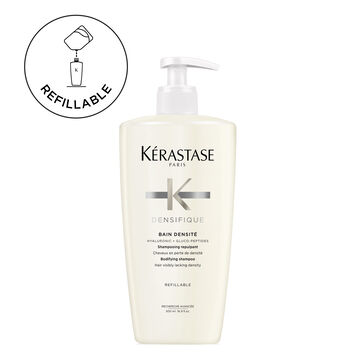
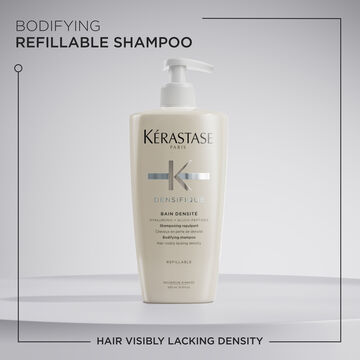
Densifique Densité Bodifying Shampoo
Thickening shampoo with Hyaluronic Acid for thinning hair.


Densifique Bodifying Conditioner
Thickening hair conditioner for thin or thinning hair.


Elixir Ultime Refillable Hair Oil
Refill your Elixir Ultime bottle again and again. Beautifying, versatile leave-in oil with a lightweight formula and advanced anti-frizz performance on all hair types.
Explore More Expert Advice


Your Personal Care

The Right Products for You
wishes.

Fusi-Dose In Salon
in under 5 minutes.
Find Your Nearest Salon
Far more than the place to get your root touch-up or an occasional trim, book an appointment at your nearest Kérastase salon for a complimentary personalized hair diagnosis.
